Breathing Techniques to Calm
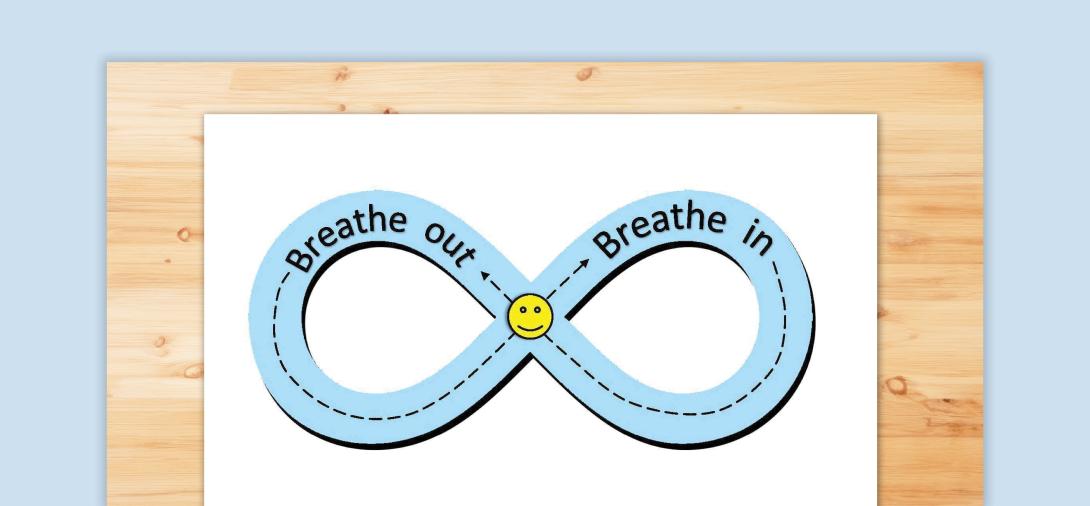
Breathing techniques are a valuable self-regulation tool that can be used in various situations to help students manage emotions, stay focused, and de-escalate.
When to Use
- Integrated into a self-management system to promote independence in emotional regulation.
- Used to increase focus and attention before or during tasks.
- Implemented in break or cool-down areas to help students recover from stress or frustration.
- Taught proactively so students can apply them before emotions escalate.
How to Use
- Introduce the visual support - Provide students with a breathing guide before they need it, while they are relaxed and engaged.
- Model the technique - Demonstrate by tracing the pattern (e.g., square, lazy 8) while breathing in and out.
- Guide the student’s practice - Help them move their finger along the visual while taking deep, slow breaths.
- Explain the purpose - Teach students that slow, deep breathing sends a calming message to the brain. Explain, “Breathing slowly can help your brain and body feel calm.”
- Encourage use throughout the day - Reinforce that they can use these techniques anytime they feel overwhelmed, anxious, or distracted. Praise the student for using breathing strategies appropriately.
Tips
- Post visuals in designated cool-down spaces at school and at home.
- Create portable supports (e.g., laminated breathing cards, stickers on desks) to encourage use anywhere.
- Pair with other calming strategies like fidget tools, quiet corners, or soft music.
- Adapt as needed. Some students may benefit from breathing apps, guided audio, or movement-based breathing exercises.
Variations
- Breathing Square - Trace a square while inhaling, holding, exhaling, and holding at each side.
- Lazy 8 Breathing - Trace an infinity symbol, inhaling on one loop and exhaling on the other.
- Five-Finger Breathing - Run a finger along the outline of the other hand, inhaling up and exhaling down each finger.
Related Courses

Autism
Visual Supports
Discover the power of visual supports for supporting students with ASD. Learn about implementation steps, skills, and resources to enhance independence.
View Course

Autism, Behavior
Self-Management
Discover self-management interventions for learners with ASD. Define, implement, and locate resources for teaching self-regulation skills.
View Course