Autism, Behavior, Instruction, Significant Cognitive Disabilities
Autism
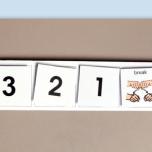
A first/then visual support is an effective strategy used to help students understand and follow a sequence of activities.
View Video
Autism, Behavior
Choice Making During Small Group
Norma uses wait time and prompting to support a student who is learning to verbally make choices.
View Video
Autism, Behavior
How to Fade Reinforcers
Your goal should be to fade reinforcers to more naturally occurring reinforcers. Featuring Sasha Long, founder of the Autism Helper.
View Video
Autism, Behavior
Creating environments for neurodiverse learners
Before trying to "fix" a child's behavior, try adjusting the learning environment to accommodate all neurodiverse learners. Good advice from Dr. Barry Prizant, Autism consultant and author of "Uniquely Human."
View Video
Autism, Behavior
What are causes of problem behaviors?
Teachers and parents can actually cause problem behaviors! Featuring Sasha Long, founder of the Autism Helper.
View Video
Autism, Behavior
Self and mutual regulation
What is the value of self-regulation and mutual regulation? Featuring Barry Prizant, Ph.D., co-developer of the SCERTS model, a comprehensive and multidisciplinary approach designed to improve communication and social-emotional functioning of young children with autism.
View Video
Autism, Assistive Technology
Autism Spectrum Disorder and Assistive Technology
This series examines the common challenges for students with autism and offers assistive technology devices and supports that may help students succeed.
View Collection
Autism
Parent-Professional Relationships
The importance of building and developing relationships between educators and parents.
View Video
Autism, Assistive Technology
Organization - Autism Spectrum Disorder and Assistive Technology
Understanding the organizational challenges for students with autism, this course describes the process to find appropriate tools to build skills.
View Course
Autism, Behavior
Learning from your Inappropriate Responses
Remember that "Behavior Change" really starts with ourselves. But, sometimes, YOU will respond inappropriately to "bad" behavior. That's okay. Sasha Long, BCBA, M.A. tells us why you should take your inappropriate responses as learning opportunities.
View Video