Full and Individual Initial Evaluation (FIIE)
Full and Individual Initial Evaluation (FIIE)
The evaluation process establishes a foundation for developing an appropriate educational program for a child. Evaluations assist in determining initial and continued eligibility for special education services, to determine a student's need for special education and related services, and to gather additional information for an ARD committee to use when developing or revising an IEP for a child.
Evaluation Procedures
When conducting the FIIE, the LEA must use a variety of assessment tools and strategies to gather relevant functional, developmental, and academic information, including information provided by the parent, that may assist in determining:
- Whether the child is a child with a disability in need of special education services; and
- The content of the child’s IEP, including information related to enabling the child to be involved in and progress in the general education curriculum, or for the preschool child, to participate in appropriate activities.
When must a child have an FIIE?
A child must have an FIIE to determine whether he or she has a disability and may be eligible to receive special education services. An FIIE must be completed before the provision of any special education or related services to a student.
The purposed of conducting this evaluation are:

NOTE
If a student is referred for an initial evaluation, all procedures prior to initiating the evaluation must be followed. This includes the distribution of the PWN, the Notice of Procedural Safeguards, and the Overview of Special Education for Parents form. In addition, the opportunity to sign INFORMED CONSENT must be provided to the parents or the adult student. The LEA must obtain consent from the parent before conducting an initial evaluation.
After obtaining consent for an initial evaluation, the school must conduct an evaluation of the child in all areas of suspected disability to determine if the child has a disability and to determine his or her educational needs.
Tip for Working with Families:
When parents request an evaluation, encourage them to put the request in writing, include a date and signature, provide it to a school administrator, and keep a copy.
Evaluation Components
Components of a Comprehensive Evaluation – A Data-Gathering Process
Components of a comprehensive evaluation according to regulations regarding EVALUATION include:
- Review existing relevant evaluations and data
and determine what additional data are needed - May not use any single measure or assessment as the sole criterion
- Must evaluate the child in all areas related to
the suspected disability - Must use technically sound instruments that are:
- Selected and administered so as not to be
discriminatory on a racial or cultural basis - Administered in native language
- Used for purposes for which they are
reliable and valid - Administered as designed by trained and knowledgeable personnel
- Tailored to area of educational need, adapted to physical and sensory disabilities
- Selected and administered so as not to be
- Data in the FIIE directly assist the ARD committee in determining the educational needs of the child
- The evaluation must be sufficiently comprehensive to identify the child’s special education and related service needs, whether or not commonly linked to the identified disability category (Interventions may be provided that reflect the child’s individual needs regardless of the eligibility category).

Evaluation Considerations
- Least Restrictive Environment (LRE): The evaluation must include information related to enabling the child to be involved in and progress in the general curriculum, or for a preschool child, to participate in appropriate activities.
- Input data: The evaluation must include all existing evaluation data, classroom observations, and information provided by teachers and families.
- Independent or Private Evaluations: Private or independent evaluations that parents share with schools must be considered. Information from these evaluations can help determine, what, if any additional data is needed to determine eligibility and, if appropriate, develop an IEP.
- Medical diagnosis: The identification of the disability itself is just one of the two main elements of an evaluation. The identification of a resulting need for special education and related services is the other. A medical diagnosis is only needed for certain disability conditions and may not address the need for special education services.
- Language difference vs. disability: The LEA administers assessments that differentiate between language proficiency and disability.
Investigating the Need for Special Education and Related Services
When reviewing existing data, the evaluation team will report academic progress in the evaluation. While academic progress may indicate a child’s need for special education services, academic progress alone is not the determinative factor. The evaluation should draw upon information from a variety of sources to make an eligibility recommendation.
The evaluation should consider the supports a student is already receiving when making recommendations whether he or she requires special education. Data that shows a student is progressing towards closing the achievement gap with general education interventions is an indicator that he or she may not require special education.
BEST PRACTICE TIP
- Address in Special Education Operating Procedures local timelines for obtaining parent consent for evaluation after an LEA makes a special education referral or an oral parent request is made. (Remember: written parent requests to certain LEA personnel require a response within 15 school days.)
- Train evaluation staff about when parent consent is needed. Emphasize the difference between reviewing “existing data” and data used for focusing on the eligibility or educational and behavioral needs of a specific child.
- Encourage parents to actively participate in the evaluation process. Capture their information in the written FIIE report.
- Ask: “Does the data from parent information, school-based information and standardized assessment support the recommendations?” to ensure multiple sources of data from a variety of settings are used.
- Carefully review written evaluation reports from outside the LEA and outside the state of Texas. Check that federal requirements for all evaluations are met. Check for state requirements that are unique to Texas.
- If the student is in conservatorship, (foster care), obtain consent from the Designated Education Decision-Maker for the student. DFPS Form 2085E this form can also be found in the appendix of the TEA Foster Care & Student Success Resource Guide.
REED Requirements
A REVIEW OF EXISTING EVALUATION DATA (REED) is the process of looking at a student’s existing data to determine if additional data are needed as part of an FIIE, if appropriate, or as part of a reevaluation. A REED helps schools decide whether current information about a child can be used to determine a child’s eligibility for special education.
A REED may be a part of an initial evaluation (if appropriate).
Examples of situations where a REED is appropriate:
- The parent of a child brings in an outside evaluation from a professional and the members of ARD committee review this information to determine if additional evaluation by LEA personnel is needed.
NOTE
When a parent presents an outside evaluation, the LEA must provide prior written notice to evaluate, Notice of Procedural Safeguards, Overview of Special Education for Parents form, and the opportunity for parents to provide written consent to evaluate their child. Then the outside evaluation can be part of the REED.
- A child attends a private preschool and the parent requests an evaluation. The members of the ARD committee meet to determine what data is available and what information is needed to complete the evaluation.
- The REED must be conducted by the members of the student’s ARD committee, and others as appropriate. The members review the student’s existing evaluation data to determine the scope of the evaluation. This review process does not have to take place in an ARD committee meeting. Prior to the REED, the LEA must issue to parents the prior written notice (PWN) (see next section) of its proposal to conduct an evaluation, a copy of the Notice of Procedural Safeguards, Overview of Special Education for Parents form, and the opportunity to consent to the evaluation [19 TAC §89.1011(b)(1)], or when the LEA issues to parents the PWN of its refusal to conduct an evaluation, the LEA must also issue a copy of the Notice of Procedural Safeguards, and the Overview of Special Education for Parents form. [19 TAC §89.1011(b)(2)].
BEST PRACTICE TIP
It is best practice to collect and review all existing evaluation data on a child before beginning an initial evaluation to assist in determining eligibility.
The REED Process
When the members of an ARD committee conduct a REED, the process must include:
- Previous Evaluations,
- This can include one or more evaluations
- Evaluations and Information Provided by Parents,
- e.g., Information from early childhood programs, outside evaluations, medical reports
- Teacher Information, and
- e.g., Grades and attendance records - if possible, from multiple teachers
- Classroom Based, Local, and State Assessments.
- e.g., Intervention information and progress monitoring data, discipline reports, STAAR scores
NOTE
The committee members must ensure that information obtained from these sources is documented and carefully considered.
Based on the REED, the group of qualified professionals which includes the parent, must determine what additional data, if any, are needed to determine whether the child is a child with a disability and the educational needs of the child.
Tips for Working with Families:
- Provide families with organized copies of all documents for their records.
- Ensure that parents and families are meaningfully included in the REED process.
- Explain to parents about the types of assessments and tests that will be used.
- Keep open lines of communication and encourage parents to ask questions throughout the process.
Prior Written Notice (PWN)
The special education regulations require that parents receive PWN at least five school days (unless the parent agrees to a shorter timeframe) before the LEA proposes or refuses to:
- Initiate or change the evaluation
- Initiate or change a student’s identification
- Initiate or change the educational placement
- Initiate or change provision of a FAPE, including through graduation or exceeding age eligibility
- Cease the provision of special education and related services due to the parent’s revocation of consent for
services - The LEA must inform the child’s parents in writing if it proposes to evaluate the child for possible special education eligibility and services. The PWN must include, among other things, a statement of the parent rights, whom they should contact at the LEA for information, and the steps the district proposes or refuses to take.
- Child Find does not require schools to agree to conduct an FIE for every child. If a school does not agree with a request to conduct an FIE, it must provide PWN and explain why it refuses to evaluate.
- If the LEA proposes to conduct an evaluation, it must also include in the PWN a description of any evaluation procedure it proposes.
- The notice must be written in language that is understandable to the general public and provided in the native language of the parent or other mode of communication used by the parent.
- The LEA should include a copy of the PWN in the student’s education record.
NOTE
When dyslexia is suspected, the LEA must distribute the Overview of Special Education for Parents Form when the LEA issues to parents the PWN of its proposal to conduct an evaluation, a copy of the Notice of Procedural Safeguards, and the opportunity to consent to the evaluation [19 TAC §89.1011(b)(1)], or when the LEA issues to parents the PWN of its refusal to conduct an evaluation and a copy of the Notice of Procedural Safeguards [19 TAC §89.1011(b)(2)];
- TEA expects LEAs to distribute this form to every parent in the same circumstances as above, regardless of the disability that is suspected.
- Parents need to be asked to acknowledge receipt of the form by signing and dating the last page. Each LEA will need to retain evidence of the parent’s signature or documentation that the parent refused to provide a signature.
The Seven Elements of Prior Written Notice:
- Description of the action that the LEA proposes or refuses to take.
- Explanation of why the LEA is proposing or refusing to take the action.
- Description of each evaluation procedure, assessment, record or report the LEA used as a basis for the proposal or refusal.
- A statement that the parent(s) of a child with a disability have protection under the procedural safeguards and if the PWN is not an initial referral for evaluation, an explanation of how a copy of the NPS may be obtained.
- Resources for the parent to contact for help in understanding the IDEA and the related federal and Texas special education regulations.
- Description of any other options that the team considered and the reasons why those options were rejected.
- Description of any other factors that are relevant to the LEA proposal or refusal.
Consent for Initial Evaluation
The LEA must obtain informed consent from the parent before conducting an initial evaluation.
NOTE
Parent consent is not required when:
- Reviewing existing data as part of the evaluation or reevaluation, or
- Administering a test or other evaluation administered to all children, unless parent consent is required for all children.
The informed consent that LEA must obtain to conduct an initial evaluation means:

| The parent has been fully informed of all information relevant to the initial evaluation in the parent’s native language or other mode of communication |
|---|---|
|
| The parent understands and agrees in writing to the LEA carrying out the initial evaluation and the consent describes the initial evaluation and lists the records, if any, that will be released and to whom |
|
| The parent understands that the granting of consent is voluntary on the part of the parent and may be revoked at any time |
|
| If the parent revokes consent, that revocation is not retroactive; therefore, it does not negate an action that has occurred after the consent was given and before the consent was revoked. |

Note
Parent consent is required prior to an initial evaluation even when part of a REED.
Counting Five School Days
When counting school days, do not include the day the notice of action (PWN) was sent as part of the five school days.
- Document the date the parent signed the consent.
- Document the date the LEA received the signed consent.
- Identify the date of the first instructional day after the LEA received the signed, written consent form from the child’s parent.
- Use the first instructional day following the date on which the LEA received written consent to count days for the completion of the initial evaluation.
- See SPP 11: Child Find (Timely Initial Evaluation) Frequently Asked Questions (FAQs) for more information.

FIIE Process
Evaluation Procedures
- Child is identified as possibly needing special education and related services.
- PWN, Procedural Safeguards, and the Overview of Special Education for Parents form is given to parents, andparental consent is obtained.
- Child is evaluated and written report is completed.
- A copy of the written report is given to the parents as soon as possible after its completion, but no later than five school days prior to the initial ARD meeting.
- ARD meeting is scheduled and held.
- Eligibility is decided.
- If eligible, IEP is written.
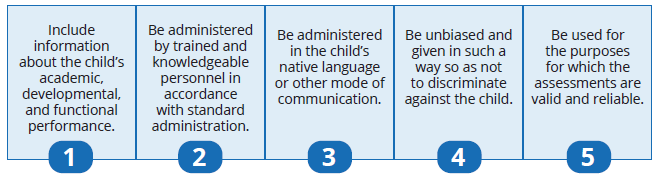
The evaluation process for the child must:
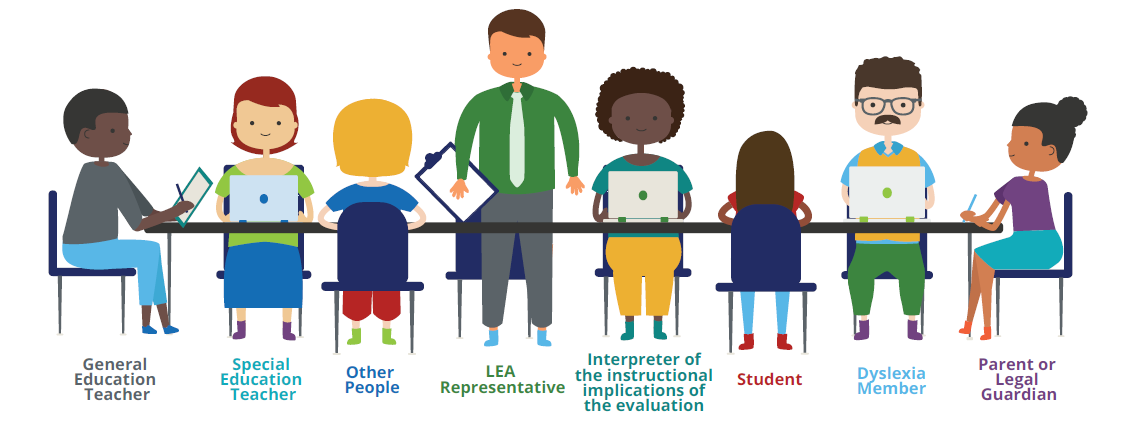
Once consent to evaluate the student is received from the parent, a MDT is formed, and this team assumes the responsibility of following all evaluation procedures.
The MDT members may vary due to suspected areas of disability and the need for specific evaluator skill sets. The MDT that collects or reviews evaluation data in connection with the determination of a student's eligibility must include, but is not limited to, the following:
- a licensed specialist in school psychology (LSSP)/school psychologist, an educational diagnostician, or other appropriately certified or licensed practitioner with experience and training in the area of the disability; or
- a licensed or certified professional for a specific eligibility category defined in TAC §89.1040(c).
Timelines

For children ages 3 through 21, the FIIE and resulting report must be completed no later than 45 school days from the day the school receives written consent. The first day of an FIIE timeline is the first school day following the date written consent is received by the LEA from the parent. However, if the child has been absent from school during the evaluation period on three or more school days, the evaluation period may be extended by the same number of school days that the child was absent.
When written consent for evaluation is received with less than 35 school days before the last instructional day of the year, the 45-school day evaluation timeline extends into the following school year.
If the school receives the written consent for the initial evaluation request at least 35 but less than 45 school days before the last instructional day of the school year, the written report of the FIIE must be completed and provided to the parent by June 30th of that year. However, if the child is absent from school on three or more days during this evaluation period, the June 30th due date no longer applies. Instead, the general timeline of 45 school days plus extensions for absences of three or more days will apply.
If a child is under five years of age by September 1 of the school year and not enrolled in public school or is enrolled in a private or home school setting regardless of age, the initial evaluation and the resulting report must be completed no later than 45 school days from the day the school receives written parental consent.
If the parent does not consent to the initial evaluation, the school may, but is not required to, pursue the evaluation by asking for mediation or requesting a due process hearing. If the school decides not to pursue the evaluation, the school does not violate the IDEA Child Find duty.
A copy of the written FIIE report must be provided to the parent as soon as possible after completion of the report but no later than five school days prior to the initial ARD committee meeting, which will determine a student's initial eligibility or not later than June 30 if applicable.
The ARD committee must make its decisions regarding a student's initial eligibility determination and, if appropriate, IEP and placement within 30 calendar days from the date of the completion of the written FIIE report.
If the 30th day falls during the summer and school is not in session, the ARD committee must meet no later than the 15th school day of the following school year to finalize decisions concerning the student's initial eligibility determination and, if appropriate, IEP and placement.
If the 30th day falls during the summer and school is not in session, but an FIIE report indicates that the student would need extended school year services during that summer, the ARD committee must meet as expeditiously as possible after the completion of the report.
BEST PRACTICE TIP
In addition to the requirement to provide a copy of the written FIIE report to parents, one member of the MDT should verbally explain the written report to parents.
Visit this page below to view the PDF of the Special Education FIIE Timeline:

Child Find, Evaluation
Special Education Full and Individual Initial Evaluation (FIIE) Timeline and Frequently Asked Questions (FAQ)
For Children Previously Served in Part C Early Childhood Intervention (ECI) Ages 0 through 2
For children served in ECI, the LEA, after obtaining consent, will conduct an evaluation. If the child meets eligibility requirements, an IEP will be developed and implemented by the child’s third birthday as required by federal law. The ARD committee will make an eligibility determination at the initial ARD meeting.
Resources
- Prior Written Notice Quick Guide
- Prior Written Notice – Legal Requirements and Best Practices (video)
- Informed Consent for Evaluation and Services Quick Guide
- TSDS Child Find: Parental Consent Date Guidance (updated 7/18/2022)
- Student Data Review Guide When Considering a Referral to Special Education and Summary of Responses Tools
- Deaf and Hard of Hearing Students (DHH): Eligibility for Special Education
- Students with Visual Impairments: Eligibility for Special Education
- Guidance for the Comprehensive Evaluation of Specific Learning Disabilities