ECI and ECSE
Age Ranges for Eligibility
Another responsibility of the LEA is to coordinate with other agencies, such as Early Childhood Intervention (ECI) programs. The LEA will ensure that a FAPE is made available to all eligible children with disabilities ages 3 through 21 under Part B of the IDEA. A child can be referred to an ECI agency beginning at birth through IDEA Part C.
Birth Through Age Two
The LEA and the local ECI contractor have developed a coordinated Child Find system. Both the ECI and the LEA have policies and procedures in effect to identify, locate, and evaluate children who need early intervention or special education services.
Early Childhood Intervention (ECI)
The Texas HHSC is the lead state agency for ECI. The following services are provided with no out-of-pocket payment from the parent: child find, evaluation and assessment; development of the Individualized Family Service Plan (IFSP); services to children with VI or who are DHH, including children with DB; case management; translation and interpreter services; and administrative and coordination activities related to the implementation of procedural safeguards and other components of the statewide system of early childhood intervention services.
It is important for families to know that a medical diagnosis or a doctor’s referral is not needed to make a referral to ECI. Anyone involved with the child – family members, caregivers, teachers, doctors, or friends – may make a referral.
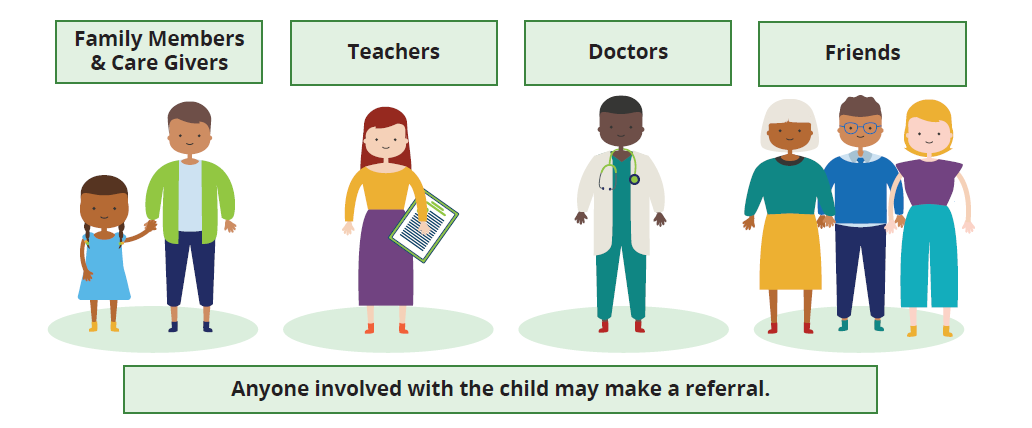
Health and Human Services ECI Parent Handbook
When a child from birth through age 2 with a suspected or documented VI is referred to an early intervention team, the LEA’s teacher of students with visual impairment (TVI), and certified orientation & mobility specialist (COMS) are considered members of the interdisciplinary team or group of professionals from various disciplines who collaborate to support the development of children with developmental delays or disabilities. An interdisciplinary team for ECI transition is a group of professionals from various disciplines who work collaboratively to support a child's transition from early intervention services to IDEA B educational settings. When a child from birth through age 2 with a suspected or documented hearing loss is referred to an early intervention team, the LEA’s teacher of the deaf or hard of hearing (TODHH) is considered a member of this interdisciplinary team. Parental consent is required for ECI and the LEA to share information. With parental consent, a TVI or TODHH may be consulted for ways to obtain the required medical documentation leading to a full referral. Consultation may include phone calls, emails and/or home visits, if necessary. ECI must provide case management services for students with visual impairments or who are deaf or hard of hearing. An IFSP meeting will be held in place of an ARD committee meeting.
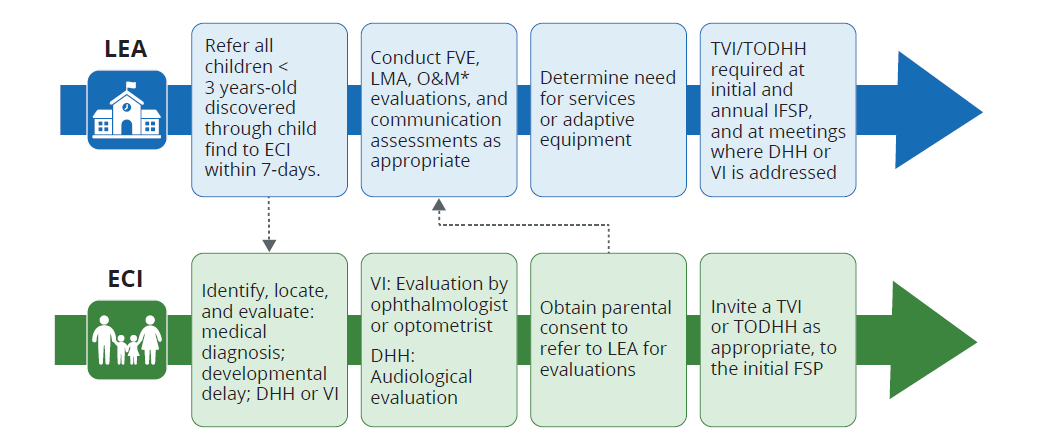
Transition from ECI to ECSE
At age three, children with disabilities may become eligible for special education services from an LEA. Not all children who receive ECI services qualify for services provided by an LEA. Therefore, at least 90 calendar days before a toddler receiving ECI services turns three years old, a meeting will be scheduled to help the family transition from ECI services to special education services, if appropriate. If the child qualifies for special education services, those services must be made available to the child on his or her third birthday.
IDEA requires a smooth and effective transition from one system to the next for children who receive services through ECI under IDEA Part C and are potentially eligible for Part B services. Both programs must work together in order to meet the IDEA requirement for public schools to develop and implement the IEP for each child that is eligible by his or her third birthday.
Early Childhood Intervention Memorandum of Understanding
A Memorandum of Understanding or MOU is a document that describes the broad outlines of an agreement that two or more parties have reached. The Texas HHSC and the TEA created an MOU with the purpose to:
- define roles and responsibilities between the HHSC and TEA within the respective federal and state mandates
- enhance interagency collaboration and relationships; and
- coordinate an effective system of activities, policies, and procedures between TEA and ECI which guide and support the development and implementation of transition services for families of children with disabilities who are approaching age three.
For the child who may be eligible for ECSE, with the approval of the child's family, a transition conference among ECI, the family, and the LEA will be held. This meeting will occur at least 90 days, and not more than nine months, before the child's third birthday to discuss any services the child may receive under ECSE (IDEA-B).
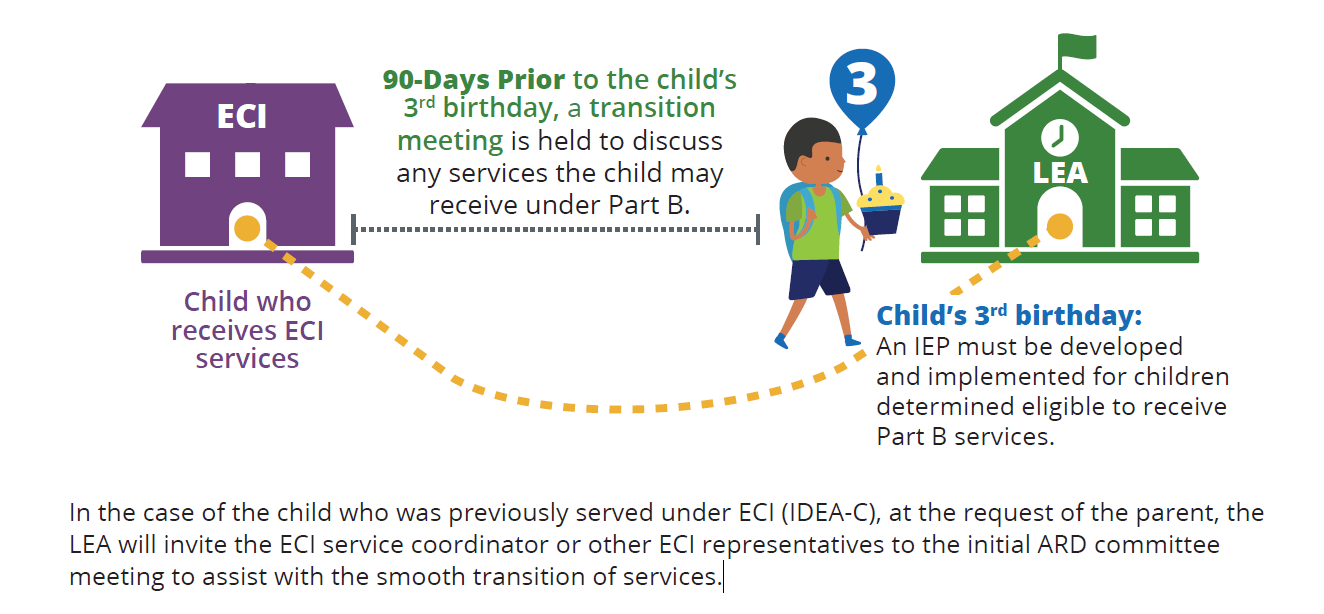
In the case of the child who was previously served under ECI (IDEA-C), at the request of the parent, the LEA will invite the ECI service coordinator or other ECI representatives to the initial ARD committee meeting to assist with the smooth transition of services.