Recognizing Presuming Competence in Practice for Students with Complex Access Needs
(upbeat music) - One of the things that an administrator would see within a classroom where the teacher and the whole team is presuming competence. And that is that they would begin to speak about students in ways that show they're viewing that student through a strengths-based lens. People would talk about Joanie as, "Right now, Joanie doesn't use her voice to communicate, but boy, we're all getting really good at reading her facial expressions." We we've got an evaluation scheduled so that we can perhaps give her a more conventional way to communicate with her, with her classmates and with the teacher. We're going to just aim high. We're going to see if, with exposure, to the rich literacy environment that you know, I'm committed to having in my classroom, plus some really great evidence-based literacy instruction. We're really hoping. We're confident that she can become a reader. So there's one indicator. That's how people talk about students. A second indicator is does the administrator see the student with complex support needs participating sort of at the same rate as other students? So if other students typically get called on three times during a 50 minute period, it would be great if the student with disabilities is called on the same amount of time or the same, the same rate of response. Is the teacher inviting the student to contribute? Because if this is a student who's just an emergent communicator, she may not have a way to raise her hand, to speak out an answer. Does the teacher take that time to say, "Luanne, I would love to hear whether or not you agree with this. Let me give you just a couple of minutes to think about your answer, and then I'm going to come back to you." Another way that we can sort of assess or find out whether people are presuming competence is if the students, in the student with disabilities instructional materials reflect academic standards. So if you go into a classroom and the students are watching, you know, and enacted play of Romeo and Juliet, and then they have to write an alternate ending. If the student with disabilities is responsible for hitting the play button and then collecting the papers at the end of the class. But if the student's not really participating in communicating about or writing in a same, a similar way. You know there are some of those initial indicators in place for inclusion, but that it's maybe the, the expectations for student learning that need to rise.
In this video, Cheryl Jorgensen, an expert on inclusion for students with significant cognitive disabilities advises administrators regarding evidence of presuming competence that may be found in a classroom. This video aligns with the Rubric of Effective Practices for Students with Significant Cognitive Disabilities.
Related Content

Significant Cognitive Disabilities, Inclusion
Presuming Competence for Students with Complex Access Needs
Inclusion, Significant Cognitive Disabilities
Inclusionary Coaching Guide For Students with Complex Access Needs

Significant Cognitive Disabilities, Inclusion
The Fundamentals of Inclusive Education for Students with Complex Access Needs

Significant Cognitive Disabilities
Teamwork and Transitions
Significant Cognitive Disabilities, Inclusion
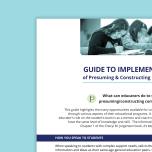
Guide to Implementation of Presuming and Constructing Competence
Significant Cognitive Disabilities, Inclusion
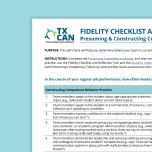
Fidelity Checklist and Reflection Tool: Presuming and Constructing Competence
Significant Cognitive Disabilities, Inclusion
Importance of Presuming Competence for Students with Complex Access Needs and the Least Dangerous Assumption

Significant Cognitive Disabilities, Inclusion
Least Dangerous Assumption: Evidence Based Practices for Students with Down Syndrome
Significant Cognitive Disabilities, Assistive Technology
