Data Collection
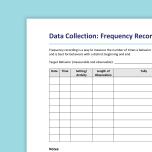
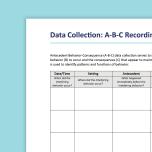
- We collect data for a variety of purposes in the classroom. Each type of data is collected in the way that makes the most sense for what we are trying to measure. For instance, we have IEP bins for our students we use during their one-on-one work sessions with us. In the bin we keep a data folder like this. When working with the student, the staff member takes notes on scratch paper for each of the activities the student completed during the session. They record the date and skill and put check marks if the student did the trial correctly or an X if they didn't. Later, I take those notes and record them more formally in the folder onto a chart like this marking the dates and scores for each of the skills. I use this to track student progress and help determine grades. When we want to know how a student is doing on a task that has multiple steps, we can use a task analysis form. We list the steps the student has to perform in the activity. Then when working with the student, we mark the level of prompting they may have needed for each step. This helps us see small amounts of progress our students are making, such as becoming more independent on more parts of a task over time. Here on two digit subtraction without regrouping, the student is able to perform the first step independently, but requires increasing support for the remaining steps. If a student exhibits an unwanted behavior, we use an ABC data collection form to look at the situation as a whole. What happened before the behavior? What did the behavior look like? And what happened after the behavior? This helps us plan interventions and supports to try and prevent the behavior from happening again. For some behaviors, we use a data collection sheet to track the frequency they occur to determine if our interventions and supports are working. If we are tracking a negative behavior, we want the frequency that we see the behavior happening to go down.
This video shows one educator reviewing some of the data collection forms used frequently by her classroom team.
Related Content

Significant Cognitive Disabilities
Teamwork and Transitions
Significant Cognitive Disabilities, Behavior, Instruction, ARD/IEP Supports, Inclusion
Rubric of Effective Practices for Students with Complex Access Needs
Significant Cognitive Disabilities, ARD/IEP Supports, Instruction, Assistive Technology, Behavior, Inclusion
Administrator Companion Document to the Rubric of Effective Practices for Students with Complex Access Needs
Significant Cognitive Disabilities, Instruction
Task Analysis Form
ARD/IEP Supports, Behavior, Significant Cognitive Disabilities, Autism, Evaluation, Instruction
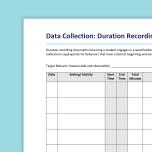
Data Collection: Duration Recording
ARD/IEP Supports, Behavior, Significant Cognitive Disabilities, Autism, Evaluation, Instruction
Data Collection: Frequency Recording
ARD/IEP Supports, Behavior, Significant Cognitive Disabilities, Autism, Evaluation, Instruction
Data Collection: A-B-C Recording
ARD/IEP Supports, Behavior, Significant Cognitive Disabilities, Autism, Evaluation, Instruction
Data Collection: Interval Recording
ARD/IEP Supports, Significant Cognitive Disabilities, Autism, Behavior, Evaluation, Instruction
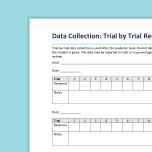
Data Collection: Trial by Trial Recording
Significant Cognitive Disabilities, Instruction
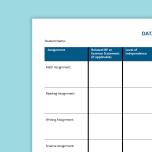
Sample Data Collection Tool for Students with Complex Access Needs
This data collection tool can be used to document classroom assignments and how they relate to IEP or essence statements, the level of independence in which the student completed the assignment, their level of mastery, and any revisions made to the assignment. This document aligns with the Rubric of
