Systems Shifts for Inclusive Education
In this video, Cheryl Jorgensen, an expert on inclusion for students with the most complex access needs, discusses some system shifts for inclusive education. This video aligns with the Rubric of Effective Practices Quality Indicator IV: Differentiated Instruction.
Related Content

Inclusion, Significant Cognitive Disabilities
Inclusionary Coaching Guide For Students with Complex Access Needs
This resource offers guidance for leading a team towards inclusive education for students with significant cognitive disabilities and complex access needs.
View Article
Significant Cognitive Disabilities, Inclusion
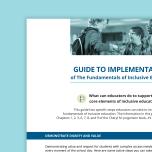
Guide to the Implementation of The Fundamentals of Inclusive Education for Students with Complex Access Needs
This guide lists the specific steps Educators can take to implement the fundamentals of inclusive education.
View Document

Significant Cognitive Disabilities, Inclusion, Instruction
Universal Design for Learning (UDL) for Students with Complex Access Needs
Master the principles of UDL, overcome implementation barriers, assess lesson fidelity, and design universally inclusive lessons for all students.
View Course

Significant Cognitive Disabilities, Inclusion
The Fundamentals of Inclusive Education for Students with Complex Access Needs
Explore the core elements of inclusive education and research-backed positive outcomes for all students.
View Course
