Importance of Presuming Competence for Students with Complex Access Needs and the Least Dangerous Assumption
So the idea of presuming all students' competence is partly just this idea that I think every school has emblazoned on its wall and within its mission statement, and that is that we want to have high expectations for all of our students. Another part of presuming competence is that I think we need to apply another principle called the least dangerous assumption. When we start to, go beyond just that lofty thought about, you know, high expectations and really target in on what do we want this student to really know and be able to do. And the least dangerous assumption says that in the absence of hard, definitive data about what the student currently knows and what the student might be able to achieve, we should presume the highest level of competence, the highest expectations possible. Of course, students can only reach those expectations if they have a way to receive the same information as typical students and communicate their knowledge and their proficiency. So we need to make sure that all students do have those effective means of communication. What does presuming confidence have to do with students' futures? Well, I often tell the story about two students that I two high school students that I once worked with, Sean and John. Sean's profile was he perseverates on different things in his environment. He has a hard time paying attention. He doesn't read, and, he's currently in a separate educational program for students with disabilities because the team linked up his presumed competence with his placement. John, people describe as, he's really a friendly kid. He likes a variety of activities during the day. He's always in motion, you know, kind of eager to join the next activity. You can always rely on John to tell you what time it is because he's always paying attention to his watch. He's an emergent literacy learner. So I tell the story of those two students, and then I talk about what their transition plans are like. Sean's transition plan says he will live in a group home and go to a sheltered workshop or a day habilitation program. John's transition plan says he will go on to post secondary education. He will eventually have a job in a supported employment situation. So after I've told these stories, I put a picture up on my PowerPoint presentation, and it's a picture of one student. And that student is really an amalgam of Sean and John, but John is viewed through a more strength based lens. His expectations for learning are not limited, they're unlimited, and his what people think might be his future adult life is an inclusive one in the community. So that view that we have of students about their abilities not only influences their current educational program for what we but also what we what we hope and what we will work for to help them achieve their life goals.
In this video, Cheryl Jorgensen, an expert on inclusion for students with the most complex access needs, discusses presuming competence and the Least Dangerous Assumption. This video aligns with the Rubric of Effective Practices Quality Indicator III: Classroom Climate.
Related Content

Significant Cognitive Disabilities, Inclusion
Presuming Competence for Students with Complex Access Needs
Inclusion, Significant Cognitive Disabilities
Inclusionary Coaching Guide For Students with Complex Access Needs
Significant Cognitive Disabilities, Inclusion
Guide to Implementation of Presuming and Constructing Competence
Significant Cognitive Disabilities, Inclusion
Fidelity Checklist and Reflection Tool: Presuming and Constructing Competence
Significant Cognitive Disabilities, Instruction, Assistive Technology
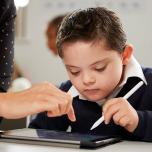
Designing and Supporting Instruction
Significant Cognitive Disabilities, Assistive Technology, Instruction
Connecting Communication and Instruction for Students with Complex Access Needs
Significant Cognitive Disabilities, Inclusion
Least Dangerous Assumption: Evidence Based Practices for Students with Down Syndrome
Significant Cognitive Disabilities, Assistive Technology
