- Hi administrators. Welcome to the Texas Complex Access Network, TX CAN. This site was designed for educators and families that have a student with significant cognitive disabilities. Our mission, to provide resources and training that ensure access to the curriculum for all students, including students with complex support needs. (upbeat music) This presentation focuses on the role of the administrator, background history, misconceptions, and examines the research and data. Depending on the combination and severity of disabilities and the student's age, this diverse group of students exhibits a wide range of characteristics.
These may include: limited speech or communication, difficulty in basic physical mobility, a tendency to forget skills when not used frequently, trouble generalizing skills from one situation to another, and/or a need for support in major life activities, such as domestic skills, leisure activities, community use, and vocational skills. We need to take a close look at how students with significant cognitive disabilities have been served in the past. A common myth that must be debunked is that separating students with cognitive disabilities from the general education population is in the best interest of the student.
This just isn't true. It is wrong to assume that the presence of students with cognitive disabilities is detrimental to a classroom or to other students. Equally misguided is the assumption that they can't learn or make meaningful contributions to society. In fact, the opposite is true on both fronts.
What we do know is that when provided with appropriate support, students with even the most severe disabilities can communicate and experience greater independence. Today, they are learning content never imagined possible. In their 2015 research, Spooner and Browder concluded, "It is evident that students who have the most "challenging disabilities have not yet reached the ceiling "on their potential achievement." Unfortunately, some educators may still hold false assumptions about what students with significant disabilities are capable of.
This is where you come in. Administrators are crucial in dispelling myths and ensuring students receive the best support possible on their campuses. Let's take a look at the top four misconceptions and contrast each one with what the research now tells us. Misconception number one, the student is unable to connect to or learn from grade-level content.
We know this is not true. We must presume competence. Presuming competence means embracing the belief that every student is capable of learning, even if they're not able effectively demonstrate their knowledge or understanding. We need you to support educators in finding the combination of supports that will enable greater participation and learning.
Misconception number two, the student is unable to communicate. Again, research has demonstrated that when given appropriate support and instruction, students with the most significant cognitive disabilities can share their likes and dislikes, make choices, and communicate their needs. Additionally, there are no prerequisites that students must demonstrate in order to be eligible for augmentative communication systems and supports. While expressive communication may be a struggle, we must assume that the student can understand what is being said to them.
Is it possible we have not given them the tools and support to communicate what they have to say to us? Misconception number three, the student has reached a plateau and is unable to learn anything beyond this point. We all continue to learn and grow throughout our life. Students with significant cognitive disabilities are no different.
They may learn at a slower rate, but learning continues throughout life. Never count any student out. Misconception number four, the only reason to put students with significant cognitive disabilities in a gen-ed class is for social skill development. Their best options for inclusion are electives and PE.
First of all, federal law requires that all students be included to the maximum extent appropriate. And the research is very clear, better outcomes are achieved for all students when students with complex access needs are included with their same age non-disabled peers, regardless of the severity of the disability. So let's take a step back. As an administrator, you have the ability to empower your educational staff and prepare them to educate students with significant cognitive disabilities.
This begins with professional development. TX CAN has developed many free online courses and resources. Take time to thoroughly review the website and share resources with your staff. A great starting point would be "Building a Foundation for Supporting Students "with Significant Cognitive Disabilities."
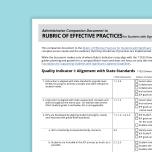
This free online course includes a rubric of effective practices and an action plan for continuous improvement. It's TTESS aligned and covers the five quality indicators
of effective practices: alignment with state standards, effective teams, classroom climate, differentiated instruction, and social communication. We have talked a lot about research. You might want to check it out for yourself. See the TX CAN research summary.
You'll find an overview of the research and a call to action for Texas educators. Thank you for your time. Let's give every student the opportunity to learn, grow, and connect. To find out more, contact your regional education service center TX CAN specialist today.
(upbeat music)