Authentic Inclusion for Students with Complex Access Needs
(bright music) - The difference between authentic inclusion and what we may often see in schools to me can be captured in one word. And that is participation. When students with complex access needs go into a general education classroom and they are physically separated from their classmates, and when they do not actually participate in the classroom instruction, the classroom discussion, when they don't actually produce a piece of work, and that's not authentic inclusion. Inclusion has its foundation in this idea of valued membership and belonging and participation in all the academic and social routines of the classroom. I want to make it clear that that does not mean that students have to produce exactly the same work because the expectations for their learning, may be somewhat reduced in depth, breadth, or complexity from their general education classmates. But if all students are writing up a lab report in science, then we expect to see some kind of a report from the student with complex access needs.
In this video, Cheryl Jorgensen, an expert on inclusion for students with the most complex access needs, describes authentic inclusion. This video aligns with the Rubric of Effective Practices Quality Indicator IV: Differentiated Instruction.
Related Content

Significant Cognitive Disabilities, Inclusion
The Fundamentals of Inclusive Education for Students with Complex Access Needs

Inclusion, Significant Cognitive Disabilities
Inclusionary Coaching Guide For Students with Complex Access Needs

Significant Cognitive Disabilities, Instruction, Assistive Technology
Designing and Supporting Instruction
Significant Cognitive Disabilities, Inclusion
Inclusive Education and Least Restrictive Environment and How They Differ
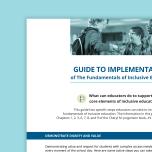
Significant Cognitive Disabilities, Inclusion
