Overview of the Tiered Interventions Using Evidence-Based Research (TIER) Initiative

This article presents an overview of Tiered Interventions Using Evidence-Based Research (TIER); an initiative funded by the Texas Education Agency (TEA) to provide guidance and information about the Multi-tiered System of Supports (MTSS) framework.
What is TIER?
TIER was created to increase local education agency (LEA) and education service center (ESC) capacity to develop and implement an effective, integrated, comprehensive MTSS framework for intervention that is grounded in differentiated instruction and aligns with the systems that are fundamental for all students’ academic, behavioral, mental health and wellness. This article provides information about TIER training and resources for districts to develop and implement an MTSS framework.
What is the goal of TIER?
TIER equips educators and stakeholders with knowledge and materials to implement MTSS effectively in every Texas school. The goal is to ensure all students receive the support they need through data-informed, tiered interventions.
MTSS Framework and Core Concepts
MTSS is a framework designed to support the whole child by integrating academic, behavioral, and mental health services. It emphasizes equitable access to interventions based on student needs.
Three-Tiered Model
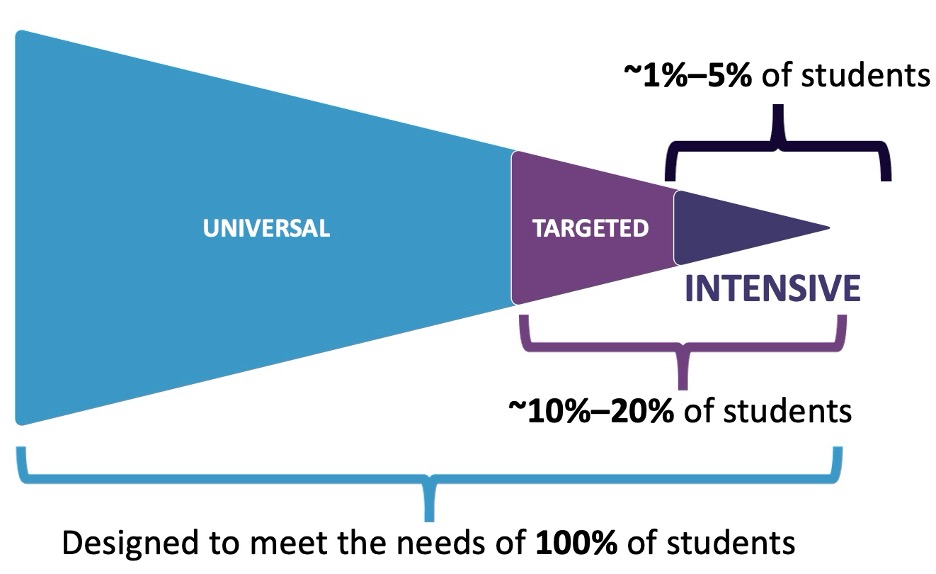
Multi-Tiered Systems
An integrated MTSS approach encompasses various other systems, such as response to intervention (RTI), positive behavioral interventions and supports (PBIS), Interconnected Systems Framework (ISF) for supporting school mental health (SMH), and other supports for early intervention and prevention. When MTSS is implemented effectively, it can provide students with the supports needed to progress towards academic and non-academic goals.
Call to Action for the Texas Educator
- Subscribe to receive email updates and stay connected. Follow MTSS as a topic of interest on TSS for training opportunities and to see when new resources are added.
- Review the following informational handouts to gain a better understanding of the MTSS framework and three-tiered model.

MTSS
Processes Within the Multi-Tiered System of Supports (MTSS) Framework
TIER Training
TIER resources include content organized into 9 broad topics of MTSS, referred to as modules or collections. Within each of these modules, there are individual learning pathways, or specific trainings, that have been or are being developed to provide more in-depth information. Content is regularly updated, and some pathway topics may not yet be available for training.
Pathways Map
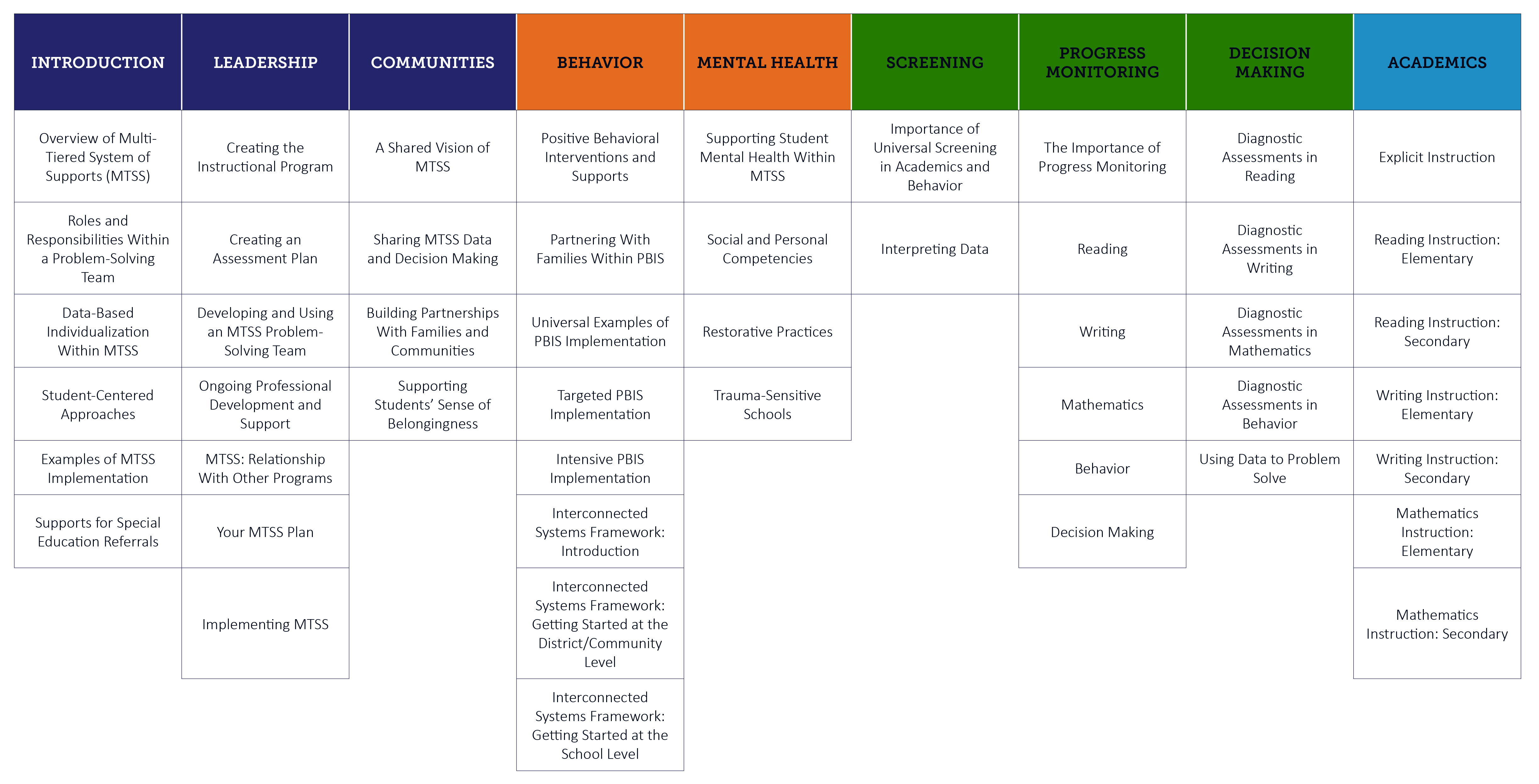
Introduction Module
The TIER Introduction module provides a foundation for all TIER pathways and helps ensure a consistent understanding of MTSS vocabulary and concepts.

MTSS
MTSS Introduction Module

MTSS
TIER Introduction Module Quick Reference Guide
Introduction Module Trainings

MTSS
Examples of MTSS Implementation

MTSS
Roles and Responsibilities Within a Problem-Solving Team

MTSS, Inclusion
Student-Centered Approaches

MTSS, Evaluation
Supports for Special Education Referrals

MTSS
Data-Based Individualization within MTSS

MTSS
Overview of Multi-Tiered System of Supports (MTSS)
Leadership Module
The Leadership Module aids district and campus leaders in implementing the elements and processes needed to plan instruction, problem solve and consistently analyze data effectively within an MTSS framework.

MTSS
MTSS Leadership Module

MTSS
TIER Leadership Module Quick Reference Guide
Leadership Module Trainings

MTSS
Creating an Assessment Plan

MTSS
Developing and Using an MTSS Problem-Solving Team

MTSS
MTSS: Relationship With Other Programs

MTSS
Ongoing Professional Development and Support (MTSS)

MTSS, Instruction
Creating the Instructional Program

MTSS
Your MTSS Plan
Communities Module
The Communities Module guides educators in understanding how to build partnerships between schools and communities to support effective MTSS implementation.
Live Communities Module Training

MTSS
A Shared Vision of MTSS
Behavior Module
The Behavior Module aids educators in implementing evidence-based practices for behavior within an MTSS framework.

Behavior, MTSS
Behavior Module

MTSS
TIER Behavior Module Quick Reference Guide
Behavior Module Trainings

Behavior, MTSS
Targeted PBIS Implementation

Behavior, MTSS
Intensive PBIS Implementation

Behavior, MTSS
Interconnected Systems Framework: Introduction

Behavior, MTSS
Interconnected Systems Framework: Getting Started at the School Level

Behavior, MTSS
Interconnected Systems Framework: Getting Started at the District/Community Level

MTSS, Behavior
Partnering With Families Within PBIS

Behavior, MTSS
Positive Behavioral Interventions and Supports
Mental Health Module
The Mental Health Module aids educators in implementing evidence-based practices for mental health within an MTSS framework and includes the Trauma-Sensitive Schools pathway which may be used to satisfy the statutory training requirement of Texas Education Code §38.036.

MTSS
Mental Health Module

MTSS
TIER Mental Health Module Quick Reference Guide
Mental Health Module Trainings

MTSS
Trauma-Sensitive Schools

MTSS
Social and Personal Competencies

MTSS
Supporting Student Mental Health Within MTSS
Screening Module
The Screening Module guides educators in understanding the purpose and importance of screening as well as how to interpret and use screening data.

MTSS
Screening Module

MTSS
TIER Screening Module Quick Reference Guide
Screening Module Trainings

MTSS, Behavior
Importance of Universal Screening in Academics and Behavior

MTSS
Interpreting Data
Progress Monitoring Module
The Progress Monitoring Module guides educators in understanding the purpose and importance of progress monitoring as well as how to interpret and use progress-monitoring data.
Progress Monitoring Module Trainings

MTSS
The Importance of Progress Monitoring

MTSS
Decision Making

MTSS
TIER Progress Monitoring Tool

MTSS, Instruction
Mathematics Progress Monitoring Measures
Decision Making Module
The Decision Making Module aids educators in using data to make decisions within an MTSS framework.
Decision Making Module Trainings

MTSS
Diagnostic Assessments in Mathematics

MTSS
Using Data to Problem Solve
Academics Module
The Academics Module outlines information and resources to support the use of evidence-based academic interventions.
Academics Module Trainings
MTSS, Instruction
Mathematics Progress Monitoring Measures

MTSS, Instruction
Explicit Instruction

MTSS
Reading Instruction: Elementary

MTSS
Writing Instruction: Elementary

MTSS
Math Instruction: Elementary
How Do Educators Access TIER Training?
There are three ways to participate in TIER training:
- Attend a face-to-face training delivered by a certified TIER trainer within your ESC or district
- Enroll in an on-demand, self-paced online course (select trainings available on TEALearn)
- Become a TIER certified trainer by completing certification requirements during a training of trainers session (open to Texas district or ESC staff responsible for MTSS training or implementation support in their district/region)
Find a TIER certified trainer in your region for face-to-face trainings
There are certified TIER Trainers at every regional Education Service Center who offer training and support to educators in their region. Review the Statewide Contact Information to find a certified trainer in your region.
Enroll in TIER Canvas Courses
Select TIER Canvas courses are available through the TEA Learn online platform. The content of TIER Canvas courses mirrors the content of face-to-face pathways while providing additional interactivity and engagement. Continuing professional education (CPE) hours can be earned by course completion. Courses are:
- Free
- Self-paced
- Completed in any order
Become a Certified Trainer in your Region or District/ Charter
Are you responsible for providing professional learning related to MTSS in your district or region? Become a TIER Certified Trainer.
Educators can become certified TIER trainers by completing training-of-trainer sessions passing content assessments, and submitting artifacts (i.e., evidence of learning in response to specific questions or prompts). Once certified, trainers receive access to all training materials and resources needed to facilitate training, opportunities to participate with other TIER trainers through a Community of Practice, and technical assistance support from the TIER team.