Transitioning Students to New Educational Settings
In this video, Ayo Jones covers easing student transitions to new educational settings. This video aligns with the Rubric of Effective Practices Quality Indicator II: Effective Teams.
Related Content
Significant Cognitive Disabilities, Inclusion, Transition
Transitioning a Student with Complex Access Needs from a Self-Contained to a General Education Classroom

Significant Cognitive Disabilities
Teamwork and Transitions
Significant Cognitive Disabilities, Instruction
May Monthly Instructional Guide for Students with Complex Access Needs
Significant Cognitive Disabilities, Inclusion, Transition
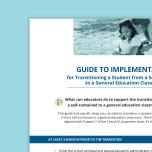
Guide to Implementation for Transitioning a Student from a Self-Contained to a General Education Classroom
Significant Cognitive Disabilities, Inclusion, Transition
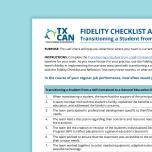
Fidelity Checklist and Reflection Tool: Transitioning a Student from a Self-Contained to a General Education Classroom
This self-check will help you determine where your team is currently performing in regard to transitioning students with complex access needs for inclusion. Complete the Transitioning a Student from a Self-Contained to a General Education Classroom training and then complete this document to get the
Significant Cognitive Disabilities
