(upbeat music) - Hey, y'all. It's Ayo here. Let's talk about these standards. If you are breaking out into a cold sweat, just thinking about the process of taking a high school algebra or biology standard and making it work for your students, I'm here to show you that it is not so bad.
I mean, no, really, it's not so bad. I have a grade level activity that students in biology are studying that targets the concept of taxonomic groups. That's all related to how we classify organisms based on shared characteristics, like as bacteria, plants or animals, and so on. This is a ninth grade biology standard that I feel some people might think of as unimportant or unattainable or unrealistic, but I want you to stop right there.
We have high expectations for our students and this topic is totally important. It's totally attainable and it's totally realistic. Plus, we have a legal obligation to teach it, and our students deserve the opportunity to learn it. But let's make this work for them.
This activity wants students to look at a blue whale and an ibex. Huh? Whoa! I can see that there are some domain and species taxonomy lined up on the side.
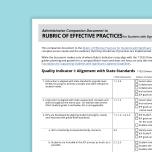
But, now what do I do to make this work? Okay, let's go back to the vertical alignment. I can see it falls under the biology eight concept, and with the curriculum framework, I can see the main point is to know that the taxonomy is used to classify animals based on characteristics. So, that's what my students are supposed to get out of it.
Now, I've got a few students who are going to access this standard at a second grade level, and a few more who are more at a kindergarten level. So, using the vertical alignment down at the bottom, I'm gonna scan down and I actually have to go back a page so that I can see the related prerequisite skills, including identifying basic needs of plants and animals. For second grade, that one will work. For our kindergarten level students, sorting animals into groups based on physical characteristics, as well as identifying parts of animals.
Those both work super great for my students at a kindergarten level. They're perfect! But now, how do I mesh these prerequisite skills with this grade level activity? Here's where the magic happens.
This is the best part of aligning with the standards. We're gonna target the grade level concept but use the prerequisite scale as our vehicle. So, let's look back at this activity. I'm not going to lie, looking at some of the words on this chart, I'm not even sure how to pronounce them.
(Ayo laughs) But I like these pictures that are available here and I'm gonna grab some other books that I already have in my classroom, and they have other kinds of animals in them. Now remember, I'm looking to identify needs, classify based on characteristics, and identify basic parts of animals to align with the prerequisite skill using the grade level standard. So, as I sit down with students, I would really start by maybe looking at the animals on the worksheet. "What animal is this?
What about this one?" What would help the students the most at this point would be to make sure that we have their communication devices or preferred response mode available so they could tell me about these two animals. Again, this will depend on the needs of your student. So now, in order to get started here, I had to take my grade level material, add on some extra visuals, attach the preferred response mode, and reference my prerequisite skills.
Then I would look for some similarities and differences between the animals on the worksheet, and then to expand it, start to reference some additional animals. We are gonna look at these animals and find out if they like to live on land or if they prefer to live in the water. As we were talking about the characteristics, I would be very purposeful to state that these are both classed as mammals. This is my connection to the grade level standard.
So using that grade level language is going to be my connector. As we continue, I would pull in some of the other animals, including a primate which is one of the animals mentioned in the worksheet and I wanna keep making that connection. As we compared, we would mention parts of the animals, like their ears or their hands or their hooves or their fins, and connect them to the whale and the ibex from the worksheets. So, constantly taking a look at the additional materials and visuals and making a connection to the target grade level activity.
That constant process of looking to target the prerequisite skill and connecting it to the grade level material is how we make our alignment. Finally, as part of addressing this worksheet, I would make a connection to the taxonomy by saying, "As the worksheet mentions that the family cetacea is finned and lives mostly in the sea. Which animal is in the family cetacea and lives in the water?" By taking the grade level standard material that kind of seemed overwhelming and challenging to address with students who have complex access needs and adding in a response mode, additional visuals, and information from the vertical alignment for prerequisite skills, the process is a lot easier now.
I would even venture to say that this activity is actually pretty relatable to our students. It's meaningful to them and their learning outcomes, and it does effectively support their access to grade level concepts and skills. We just accessed it from a different angle through the prerequisite skill. So, I hope this helps you better align your instruction and activities to the state standards.
I'm Ayo Jones, reminding you to stay strong and teach on. (upbeat music)