- Hi, administrators, Welcome to the Texas Complex Access Network Administrator Series. We hope that you have had time to view the first video in this series, process the information, and delve deeper into some of the research and highlighted resources. (gentle music) In this video, we will be discussing inclusionary practices for students with significant cognitive disabilities. We will define inclusion, review the research, and provide you with some resources.
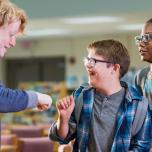
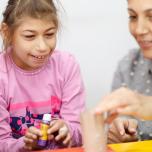
When we say inclusion of students with significant cognitive disabilities, what is the first thing that comes to mind? Take a moment and imagine an inclusive classroom. Do you picture students with significant cognitive disabilities being educated on their home campus with their same age peers without disabilities in the same general education classroom for most or all of their school day? Do you see all students educated together, using the same curriculum but with accommodations, modifications, and appropriate supports added in?
Do you see special educators and general educators collaborating on lessons, differentiating and delivering instruction so that all students' needs are addressed and diversity is celebrated? If you answered yes to these questions, then you already have a strong understanding of the true definition of inclusion. Many educators think of inclusion in terms of placement, instruction, supports, and collaboration, but it is also much more than that. It goes much deeper.
Inclusion begins with the belief that every student can learn and diversity is not only accepted, but celebrated. Inclusion is about the whole being greater than the parts, and each part being essential to the whole. Inclusion is belonging. In the past, a student with significant cognitive disabilities might have spent all 12 years with their same small group of classmates, and have little or no opportunity to build relationships with other peers.
These students worked on skills in isolation and with significant repetition, often in classrooms on the outer edges of the campus and sometimes far from their home campus. Now the vision is all students together. Students are no longer isolated from their same age, non-disabled peers. They are in classes that are age appropriate.
There is equal belonging. Now they are engaged in learning alongside their general education peers. While their lesson may look different, it is connected to the same material peers are working on and there are opportunities for sharing and interaction. Now students are involved in the same world that they will be a part of when their education is over, and they will be better prepared for it.
This is the vision. Why is inclusion important? Research has demonstrated that when students with significant cognitive disabilities are educated in the general education classroom with their same age peers, there is a positive impact on their academic achievement. They also make greater progress on social goals.
In fact, every student benefits in inclusive classrooms. Peers without disabilities also benefit by developing skills like empathy and advocacy, without any negative effect on their academic performance. Over 40 years of research and experience has demonstrated a positive correlation between the amount of time students spend in the general education classroom and increased beneficial educational and adult outcomes. This correlation applies to students regardless of disability label, perceived severity of disability, gender, or socioeconomic level.
You may be asking yourself, how is this even possible? Even though the education of students with complex needs has come a long way, how can they be included in a general education classroom with their same age peers? In truth, this process will not happen overnight, but TX CAN is here to help you get started and provide support along the way. Inclusion matters, and it is a process that must begin with professional development and educational leadership.
TX CAN has developed an entire series of short online courses to help you, plus an online coaching guide is also available. The guide was designed to help you identify your starting point, target areas for growth, and design an individualized process that makes sense for your campus or within your district. (gentle music)