Wait Card
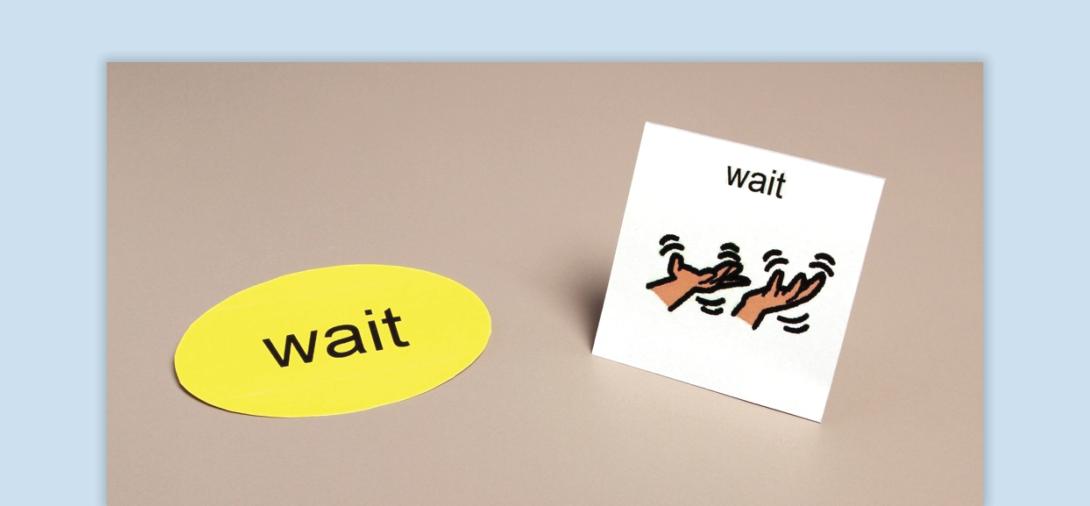
A Wait Card is a visual support used to help students understand and practice waiting.
When to Use:
- Situations where a student must wait for an item, activity, or turn (e.g., waiting in line, during transitions).
- Teaching turn-taking skills in shared play, group activities, or games.
- Supporting students who struggle with impulse control or frustration when they cannot access something immediately.
How to Use:
- Introduce the Wait Card - Show the student the card and explain that it signals a waiting period. Begin with a highly motivating item or activity to encourage engagement.
- Pair with a Verbal Cue - Present the card along with a verbal direction such as “Wait” or “You are waiting.” Demonstrate how to use the card in different scenarios before expecting the student to follow.
- Gradually Increase Wait Time - Start with short waiting periods (a few seconds) and gradually extend the duration.
- Provide Reinforcement - When the waiting period ends, remove the card and immediately allow access to the item or activity while providing positive feedback (e.g., “Great job waiting! Now you can play.”).
- Use Consistently - Integrate the wait card into daily routines, reinforcing appropriate waiting behavior across multiple settings.
Tips:
- Pair the wait card with a visual timer to provide an additional cue.
- Use simple, consistent language when instructing students to wait.
- Incorporate waiting into daily routines to build generalization across different settings.
- Provide alternative engagement (e.g., fidget toys, quiet activities) while the student waits, if appropriate.
Variations:
- Digital Wait Cards - Use digital versions on tablets or interactive whiteboards.
- Personalized Wait Cards - Customize cards with images that are meaningful to the student.
- Classroom Use - Use wait cards to manage group activities, transitions, and structured classroom routines.
Related Course

Autism
Visual Supports
Discover the power of visual supports for supporting students with ASD. Learn about implementation steps, skills, and resources to enhance independence.
View Course
